

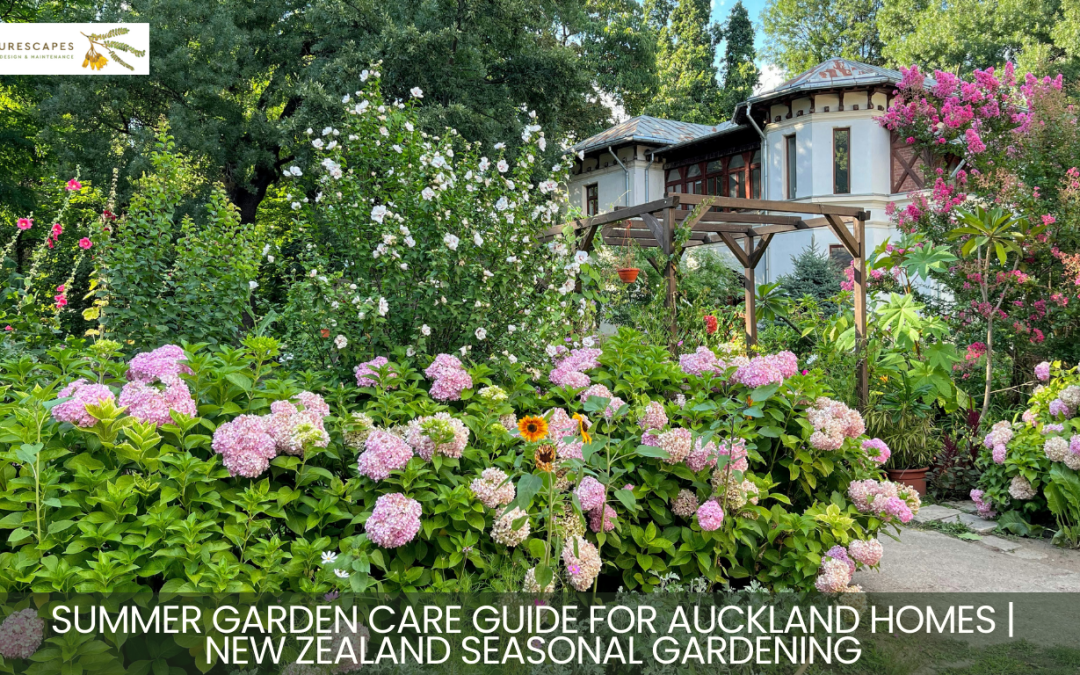
Summer garden care in Auckland prioritizes efficient water management, with deep, infrequent watering scheduled for the early morning or late evening to minimise evaporation and encourage deep root growth. Heavy mulching across garden beds helps retain soil moisture, regulate soil temperature, and protect plant roots during hot, dry summer periods. Ongoing weed control reduces competition for water and nutrients, while proactive pest management protects lawns, ornamental plants, and vegetable gardens from seasonal infestations. Balanced summer fertilising, combined with light pruning and proper sunlight exposure, supports steady, healthy growth—particularly for container plants and food-producing gardens, which are more vulnerable to heat and moisture stress in Auckland, New Zealand’s summer climate.
How to Water Your Garden Effectively in the Summer Season?
To water your garden effectively in summer, focus on deep, infrequent watering during the early morning, targeting the soil at the base of plants to encourage strong, deep root growth. Applying mulch helps retain soil moisture and keep roots cool during hot, dry conditions. Midday watering should be avoided, as high temperatures cause rapid evaporation and can lead to leaf scorch. For better efficiency and consistent moisture, especially during extended dry periods, use drip irrigation systems or soaker hoses, and ensure container plants receive regular, even watering.
When Is the Best Time to Water Your Garden in Summer?
Early Morning (Best Option):
Watering before 10 a.m. is ideal because cooler temperatures reduce evaporation, allowing moisture to soak deeply into the soil. Leaves dry naturally during the day, which helps prevent fungal diseases.
Late Afternoon or Evening (Second Best):
If morning watering isn’t possible, water in the late afternoon or early evening, focusing on the base of plants. Ensure foliage has enough time to dry before nightfall to reduce disease risk.
Avoid Midday Watering:
Watering during peak heat leads to rapid evaporation and may scorch wet leaves, making it inefficient and harmful to plants.
How Should You Water Your Garden During Summer?
Water Deeply and Infrequently:
Aim to fully saturate the soil to the root depth, watering every 3–5 days rather than shallow daily watering. This promotes deeper, more resilient root systems.
Target the Root Zone:
Use watering cans with a wand, soaker hoses, or drip irrigation to deliver water directly to the soil, avoiding leaves, flowers, and fruit.
Check Soil Moisture Before Watering:
Insert your finger 1–2 inches into the soil. If it feels dry, it’s time to water; if it’s still moist, delay watering.
Watering Potted and Container Plants:
Container plants dry out faster and require consistent watering. Water until moisture runs into the saucer, and always ensure good drainage to prevent root rot.
Why Mulching is Important in the Summer Season?
Mulching in summer is essential because it retains soil moisture, keeps plant roots cool, suppresses weeds, and nourishes the soil, reducing watering needs and stress from heat and dryness, resulting in healthier, more vibrant gardens with less effort. It acts as a protective blanket, maintaining consistent soil temperatures and preventing rapid evaporation, allowing plants to thrive even during hot, dry conditions.
Key Benefits of Mulching in Summer
Moisture Retention:
Mulch forms a protective layer that significantly reduces water evaporation from the soil surface, keeping plants hydrated longer and minimizing the need for frequent watering.
Temperature Regulation:
Mulch insulates the soil, keeping it cool during hot days and preventing extreme temperature fluctuations that stress roots, supporting steady growth.
Weed Control:
A thick layer of mulch blocks sunlight, making it difficult for weed seeds to germinate, saving time and effort in weeding.
Soil Health:
As organic mulches decompose, they gradually release nutrients, improve soil structure, aeration, and drainage, and feed plants over time.
Reduces Plant Stress:
By maintaining consistent moisture and stable soil temperatures, mulch helps plants withstand intense heat and dry spells, reducing wilting and promoting vigorous growth.
Additional Advantages
Less Watering:
Conserves water and saves time by keeping moisture in the soil longer.
Stronger Roots:
Encourages deep root growth, as roots don’t need to search far for water.
Better Aesthetics:
Provides a tidy, attractive finish to garden beds, enhancing overall landscape appeal.

How to Maintain a Healthy Lawn in Summer?
To keep your lawn healthy in summer, focus on deep, infrequent watering, adjusting mower height, leaving grass clippings to return nutrients, and using slow-release fertilizer as needed. Additionally, control weeds, aerate soil, keep blades sharp, and minimize foot traffic to support strong roots and vigorous growth.
Proper Watering Techniques
- Deep & Infrequent Watering: Water 1–3 times per week to encourage roots to grow deep and strong.
- Morning Watering: Reduces evaporation and allows blades to dry before night, preventing fungal problems.
- Check Soil Moisture: If grass doesn’t spring back when stepped on, it’s time to water.
Mowing & Blade Care
- Mow High: Keep grass around 3 inches to shade the soil and protect roots.
- Sharp Blades: Clean cuts prevent brown edges and disease.
- Leave Clippings: Returning clippings acts as a natural fertilizer.
Soil & Feeding
- Slow-Release Fertilizer: Apply on moist soil, avoid extreme heat.
- Aerate Soil: Improves water and nutrient flow, strengthens roots.
- Add Compost: Enhances soil structure and moisture retention.
Weed & Pest Control
- Remove Weeds Promptly: Reduces competition for water and nutrients.
- Pest Management: Monitor and treat grubs and common pests early.
Minimizing Lawn Stress
- Limit heavy foot traffic during hot, dry spells.
- Consistent care keeps the lawn green, resilient, and healthy throughout summer.
How to Control Weeds and Pests During Summer
Effectively controlling summer weeds and pests requires an integrated approach. Combine mulching, dense planting, and hand-weeding to manage weeds, while protecting plants from pests with insecticidal soaps, neem oil, companion planting, and physical barriers. Focus on prevention through healthy soil and plant selection, using targeted herbicides or pesticides only when necessary.
Weed Control Strategies
- Mulch Heavily: Apply 2–4 inches of organic mulch (bark, straw, compost) to retain moisture, regulate soil temperature, and suppress weed germination.
- Dense Planting/Ground Covers: Plant closely or use fast-growing ground covers to shade out weeds and reduce competition.
- Regular Hand-Weeding: Remove weeds with roots while soil is moist to prevent regrowth.
- Spot-Treat: Use vinegar, boiling water, or selective herbicides carefully, avoiding extreme heat.
Pest Control Strategies
- Physical Barriers: Use nets or row covers to protect plants from insects and animals.
- Organic Sprays: Apply insecticidal soap, neem oil, or natural sprays thoroughly on leaves, especially undersides.
- Companion Planting: Use pest-deterring plants like marigolds.
- Beneficial Insects: Encourage natural predators by planting diverse flowers.
- Garden Hygiene & Monitoring: Remove infested material promptly and inspect plants regularly.
Integrated Approach
- Healthy Soil: Improve structure and water retention with compost to support strong, pest-resistant plants.
- Right Plant, Right Place: Choose summer-hardy, drought-tolerant, or native plants to reduce stress and pest issues.
- Integrated Pest Management (IPM): Combine all methods for a sustainable, long-term solution rather than relying on a single approach.
When and Why to Prune and Deadhead in Summer Season?
Pruning and deadheading in summer helps plants stay healthy, bloom longer, and maintain shape. Deadheading removes spent flowers to encourage new buds, while pruning controls size and removes dead or diseased parts. Summer warmth promotes quick healing, but always follow specific plant needs to avoid damage.
When to Prune & Deadhead
- After Flowering: Prune spring-flowering shrubs like roses and lilac immediately after blooms.
- Throughout Summer: Deadhead perennials like marigolds, phlox, and petunias to maintain continuous flowering.
- Late Summer: Light trimming of evergreens and formal hedges keeps them neat through fall.
- Anytime: Remove dead, diseased, or damaged branches (“3 Ds”) promptly.
Why Prune & Deadhead
- Encourages More Flowers: Redirects energy from old blooms to new growth.
- Healthier Plants: Improves airflow and sunlight penetration, reducing disease risk.
- Shape & Size Control: Keeps shrubs, climbers, and hedges compact.
- Better Fruit & Flowers: Thinning or pruning boosts crop size and quality.
- Energy Channeling: Limits excessive leaf growth, supporting flowering and fruiting.
What to Prune or Deadhead
- Roses: Deadhead for repeat blooms; prune after first flush.
- Perennials: Phlox, Gaura, Penstemon, Lavender benefit from removing faded blooms.
- Shrubs: Prune flowering shrubs like Spirea or Hydrangea after blooms; check fast growers regularly.
- Fruit Trees: Light summer pruning maintains shape; major pruning is for winter.
- Evergreens: Remove damaged parts; avoid heavy cuts.
Is It Safe to Plant New Plants in Summer?
Yes, you can plant in summer, especially heat-tolerant crops and native plants, but extra care is required. Young plants are vulnerable to heat stress and dryness, so focus on deep watering, mulching, and temporary shade. Proper summer planting helps plants establish strong roots for hot conditions.
What to Plant
- Vegetables: Tomatoes, capsicums, cucumbers, beans, sweetcorn, pumpkins, carrots, beetroot, radish.
- Herbs: Basil, mint, oregano, thyme, parsley, rosemary, sage.
- Flowers: Marigolds, zinnias, cosmos, lavender, salvias, daisies, gazanias.
- Native Plants: Many New Zealand natives thrive in warm soil and dry periods.
Key Tips for Success
- Water Deeply & Consistently: Prioritize deep watering over light sprinkling.
- Mulch: Retains moisture, cools soil, and reduces evaporation.
- Prepare Soil: Mix in compost to improve water retention and nutrients.
- Temporary Shade: Protect sensitive plants with shade cloth or sheets during peak sun.
- Plant in the Evening: Helps reduce transplant shock and allows overnight recovery.
- Choose Heat-Tolerant Plants: Focus on herbs, natives, and summer vegetables.
Benefits of Summer Planting
- Quick Root Establishment: Warm soil encourages fast, strong root growth.
- Extended Growing Season: Plants mature before cooler months.
- Resilient Plants: Heat-tolerant species survive summer stress more effectively

How to Keep Soil Healthy in Summer?
High temperatures and dry conditions in summer can deplete organic matter and reduce beneficial soil microbes. Regularly adding compost improves soil structure, enhances water retention, and provides nutrients for roots. For clay-heavy soils in Auckland, mixing in organic matter also improves drainage and encourages deep root growth, helping plants withstand hot conditions.
When and How Should You Fertilize in Summer?
Excess fertilizer in summer can harm plants. Use slow-release fertilizers to provide nutrients gradually. Avoid applying fertilizer during the hottest part of the day. Instead, water plants first and fertilize in cooler morning or evening hours. This reduces heat stress and ensures plants can absorb nutrients effectively.
What Special Care Do Fruit and Vegetable Gardens Need in Summer?
Summer is critical for fruit and vegetable growth. Regular deep watering, mulching, and pest monitoring are essential. Thinning overcrowded fruits reduces stress on plants and improves overall fruit quality.
How Can You Recognize Heat Stress in Plants?
Signs of heat stress include wilting leaves, faded color, or scorched spots. Solutions include deep watering, applying mulch, and providing temporary shade during intense afternoon sun to protect plant health.
Why Do Containers and Potted Plants Need Extra Care in Summer?
Potted plants dry out faster and experience higher soil temperatures. Water consistently, use well-draining larger pots, and consider occasional liquid feeding. Proper drainage helps roots avoid heat stress and promotes strong growth.
When Should You Provide Shade or Wind Protection for Plants in Summer?
Young or sensitive plants are vulnerable to intense sun or hot winds. Use shade cloths or windbreaks to reduce stress, prevent damage, and ensure plants continue to thrive in summer conditions.
Final Thoughts
Summer garden care in Auckland is essential to keep your lawns, plants, and fruit or vegetable gardens healthy and vibrant. Key practices include deep watering, mulching, pest and weed control, pruning, and fertilization. For potted or sensitive plants, providing shade and proper irrigation is especially important.
At Naturescapes, we provide professional garden care tailored to Auckland’s climate and soil conditions. Our services include lawn care, mulching, pruning, soil and irrigation advice, and plant health monitoring. With our expertise, your garden can remain lush, healthy, and thriving even during hot, dry summer months.
Proper summer garden care not only supports plant health but also enhances your property’s beauty and value. With Naturescapes’ professional support, your garden will be resilient, attractive, and enjoyable all year round.