

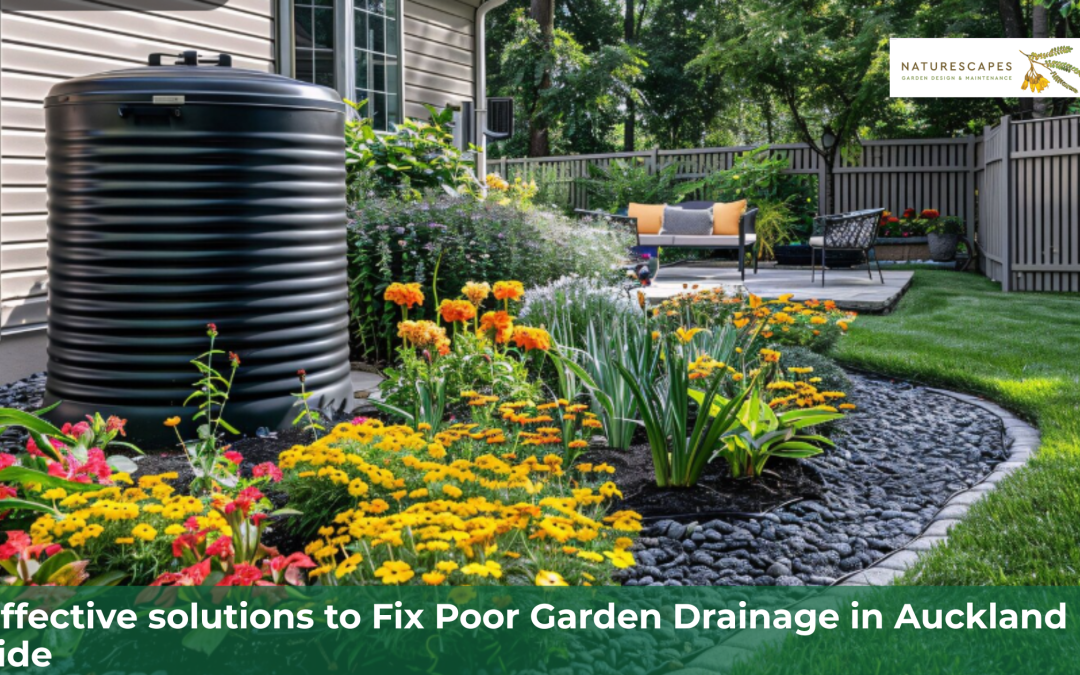
Poor garden drainage is one of the most common and persistent problems faced by homeowners across New Zealand. Heavy rainfall, clay-based soils, flat residential sections, and soil compaction from construction often disrupt natural water flow, leaving gardens waterlogged for long periods.
When water cannot drain properly, the soil structure deteriorates, plant roots struggle to get enough oxygen, and the overall health of the garden declines. Over time, lawns develop dry patches, plants fail to thrive, and drainage problems become increasingly difficult to fix.
At Naturescapes, we have extensive experience helping Auckland homeowners deal with waterlogged lawns, failing garden beds, and recurring drainage issues. In this guide, we explore what causes poor garden drainage and share long-term, New Zealand-appropriate solutions that work year after year—without relying on short-term fixes that fail after just one winter.
What Is Poor Garden Drainage?
Poor garden drainage is a condition where water cannot penetrate the soil or move away from the garden area easily. Instead of going down to the deeper layers of the soil, water stays on the surface or around the roots of plants for a very long time.
Water in a normal garden drains naturally by its roots getting oxygen and the soil staying loose and fertile. Water in a poorly drained soil displaces air, root start to weaken or rot, beneficial soil organisms die, and soil becomes compacted and lifeless. Eventually, diseased plants, damaged lawns, and more problems continually show up are the results of the scenario.
Common signs of poor drainage are standing water, muddy patches, slow, drying soil, and struggling or yellowing plants.
Why is Poor Garden Drainage So Common in New Zealand?
NZ’s natural landscape and weather conditions are the main reasons for drainage issues to be so widespread among homeowners.
Rainfall is common and usually lasts for a long time, especially during the winter. Instead of heavy, short storms, the continuous rain slowly saturates the ground until it cannot absorb any more water.
Clay soils are another factor, as they are especially common in Auckland and its neighboring areas. While clay keeps a lot of nutrients, it also holds water in extremely tight and only releases it very slowly. Also, a lot of residential plots are levelled during the construction, compacted by heavy machinery and not given a natural slope for the water to run off.
Hence, the above factors coming together, even well, kept gardens may suffer from drainage problems that are very hard to get rid of unless the garden’s soil and water movement are correctly handled.
Reasons Why Garden Soil Does Not Drain Properly?
Usually, a poor drainage issue cannot be linked to one factor only. Most of the time, it happens as a result of a combination of factors.
1. The Influence of Clay Soil
Clay soil consists of extremely small particles which are tightly packed with one another. Hence, only a tiny fraction of space is left for water and air to go through the soil. So, water drainage is slow, oxygen is scarce, and plant roots have a hard time carrying out their functions.
2. Soil Compaction
Compaction means that soil particles are squeezed together very tightly so that there is no space left between them.
This problem is mainly caused by the following activities:
- Walking on the soil
- Use of lawn mowers
- Construction work
- Landscaping with heavy equipment
Compacted soil is almost the same as a sealed surface in that it prevents water from penetrating efficiently.
3. Flat or Low-Lying Areas
Water always travels downhill.
In the case of flat terrains or low-lying parts of the garden, water pools because there is no tendency for water to flow out naturally. Under such circumstances, there still might be the need for ground water drainage to be redirected besides merely improving the soil.
How to Enhance Soil Structure for Beteter Drainage?
Enhancing the soil structure is the best long, term and environmentally friendly solution to drainage problems. Healthy soil consists of a mixture of different particle sizes in which water can move through and there is also air circulation. The suitable materials for improving soil structure comprise:
Apart from that these materials help in soil improvement in different ways. They bind fine soil particles into larger aggregates, form air pockets and by attracting earthworms and beneficial microorganisms that aerate the soil naturally.
Why Sand Is Not a Good Addition to Clay Soil?
Many people mistakenly believe that sand helps clay to drain better. Actually, sand gets into the spaces between clay particles and creates a very dense, concrete, like layer which further impedes drainage. The right remedy for clay soil is organic matter, not sand.
Raised garden beds help plants to grow better by exposing them to more air and more gravity.
I think that a raised bed of 20, 30 cm is usually enough to make the drainage better, but not too much so that the plants still have a healthy environment in which to grow. The perfect soil mixture is the one that has a good topsoil, compost and organic matter that are in the right proportions for drainage and moisture retention.
Vegetable gardens in particular benefit greatly from raised beds because they allow water to drain quickly and therefore roots get plenty of oxygen.
Flower beds raised on mounds do not hold water so long after rains and that is healthier for roots.
Besides other benefits, raised beds are good if you have a problem with getting wet or low, lying areas because soil deposits are cleaned.
When Is a Garden Drainage System Necessary?
If soil improvement and raised beds do not solve the issue of water remaining on the surface, a drainage system might be necessary.
Gravel Trenches
A gravel trench has the function of a pathway with the least resistance where water can move away from the areas causing problems. Such trenches are most appropriate for small, localised drainage issues.
French Drains
French drains are underground systems with perforated pipes that collect and redirect the water to the place where it won’t create a problem. They can be a good solution to a bigger area, a sloped property, and a problem of waterlogging that occurs all the time.
Rain Gardens
Rain gardens are shallow basins with plants where surface runoff is collected and water is given time to soak in slowly. Besides reducing erosion, they also help to eliminate soil compaction and soil pressure and are very efficient when located below downpipes or natural points of runoff.
Successful Drainage Solutions
Successful drainage solutions typically involve working with gravity rather than against it. Each property has its own natural water movement pattern, which is influenced by the slope, soil type, and the direction of rainfall.
Some of the Effective Water Management Methods Are:
- Making gentle slopes (12%)
- Setting up gravel, lined or shallow drainage channels
- Diverting surface water away from the areas with sensitive vegetation
One of the main reasons for drainage failures to be repeated is a lack of understanding and disrespect of the natural water flow.
How to Reduce Soil Compaction?
Generally, soil compaction causes plants developmental issues by restricting the smooth movement of air and water in the soil, thereby limiting the availability of oxygen to roots.
Soil compaction can be caused by ramming down soil particles tightly together; this means that after compaction, fewer big and small pores between soil particles are left.
Hence, soil and water management practices are more difficult in compacted soil, something that can ultimately result in poor growth of the plants.
Before implementing different methods to reduce soil compaction, you should first connect with an expert to assess the soil structure of your garden, especially if the soil was affected by other factors besides contamination.
Plant Selection for Poorly Drained Areas
Where it is difficult to improve the drainage of the area, the choice of plants is a very powerful tool.
Plants that are adapted to poorly drained soil usually have shallow or fibrous root systems and can survive in low, oxygen conditions. Native plants of New Zealand are especially well suited to wet winters and changing moisture levels.
Generally, shrubs do better than trees in poorly drained soil since they need less root depth and resuscitate more quickly from waterlogging.
Maintaining Good Garden Drainage
Maintaining good drainage in the garden is a process that goes far beyond a one-off attempt. The earth’s texture and the way water travels inevitably shift as time goes on, therefore, regular touch-ups are a must.
Tasks Aimed at the Long Haul:
- The continuous incorporation of organic material to keep the soil healthy
- Watching water movement following a shower
- Spotting problems at their very start, mainly during the winter season
One of the seasons that best reveal the state of drainage is winter, as the problems that lie hidden under the surface get clearly exposed by the very frequent rains.
When to Seek Professional Help
Professional help should be sought if:
- There is wet soil throughout the whole year
- The problem cannot be fixed without major work, such as excavation or drainage of the structure
- Drainage problems are causing damage or inconvenience to your neighbors or the foundations of their buildings
At Naturescapes, we specialize in landscape, safe, long-lasting drainage solutions that are specifically designed for Auckland conditions.
Final Thoughts
Bad drainage in the garden is not a matter of the surface only, it is an issue of the soil and water moving. So, if you upgrade soil structure, control the water flow naturally, and plant what is suitable, even the most waterlogged gardens in New Zealand can be healthy, efficient, and enduring.